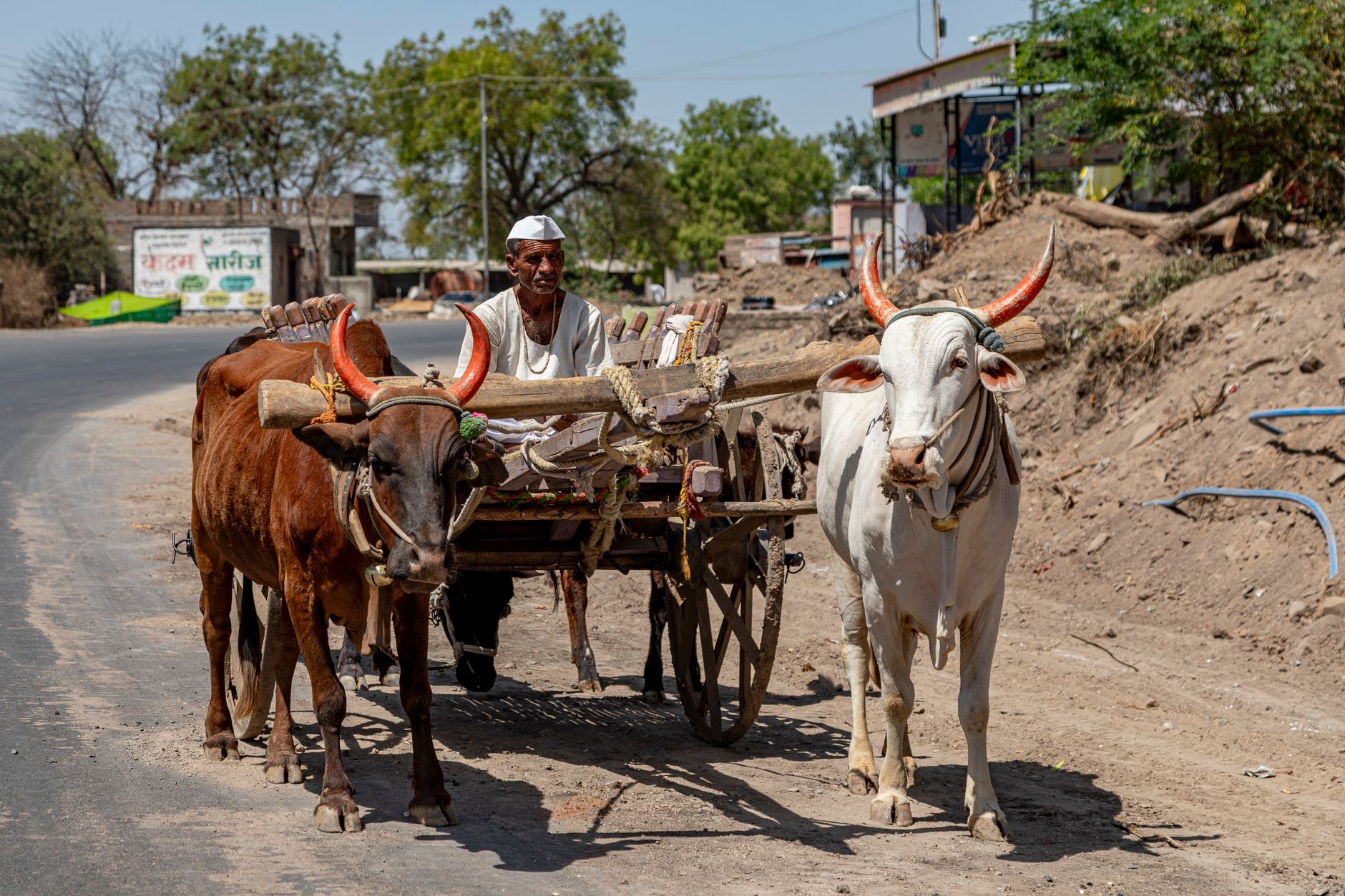
Nashik sits on the Godavari river in north Maharashtra, and it leads a bit of a double life. On one side it's one of Hinduism's holiest towns, home to the Panchavati ghats where Lord Rama is believed to have lived in exile and to the Trimbakeshwar Jyotirlinga nearby. On the other, it's India's wine capital, ringed by vineyards that have turned the rolling hills west of the city into something that looks surprisingly like Tuscany from a hot-air balloon. That combination makes Nashik an unusually flexible trip. You can spend a morning doing an aarti on the ghats and an afternoon doing a tasting flight at a vineyard twenty minutes away, something you really can't do anywhere else in India. It's also a practical base for a wider Maharashtra loop, sitting within striking distance of Shirdi and a few hours from both Mumbai and Pune. It suits pilgrims, wine-curious weekend travellers from Mumbai and Pune, and anyone wanting a slower, less touristy alternative to the usual Maharashtra circuit. It doesn't particularly suit travellers chasing grand monuments or a buzzing old-city atmosphere — Nashik's charms are quieter and more spread out than that.
Getting There
Nashik Airport (officially Gandhinagar Airport, also referred to as Ozar) has limited domestic flights, so most travellers arrive by road or rail instead. Nashik Road railway station, about 8 km from the city centre, is well connected to Mumbai, Pune, and onward routes into Gujarat and central India, with several daily trains making it an easy overnight or half-day journey from Mumbai. By road, Nashik is about 170 km from Mumbai (roughly 3.5-4 hours via the Mumbai-Nashik highway) and about 210 km from Pune (around 4 hours), both served by frequent state transport and private buses as well as self-drive options.
Panchavati and the Godavari Ghats
Panchavati is the spiritual heart of old Nashik, a cluster of temples and ghats along the Godavari tied to the Ramayana — this is said to be where Rama, Sita and Lakshmana lived during their exile, and where Lakshmana is believed to have cut off Surpanakha's nose. The Ram Kund ghat is the busiest spot, especially at dawn and dusk when the aarti draws crowds, and it's also where devotees traditionally immerse ashes. Kalaram Temple, with its striking black-stone Rama idol, and the nearby Sita Gufa (cave) round out a couple of hours of unhurried temple-hopping. Early morning is the best time to visit, both for the light on the river and to avoid the midday heat and crowds.
Trimbakeshwar Temple
About 28 km west of the city, Trimbakeshwar is one of the twelve Jyotirlingas and one of Nashik's biggest draws for Hindu pilgrims. The temple itself is architecturally impressive, built in black stone, and sits at the base of Brahmagiri hill, considered the source of the Godavari river. Entry to the inner sanctum is restricted to Hindus (a locally enforced rule, not uncommon at major Jyotirlinga shrines), but the temple complex and the walk up Brahmagiri for river-source views are open to everyone. Visit on a weekday if possible — weekends and festival days bring serious crowds and long queues.
Wine Country: Sula and Beyond
Nashik's Nashik Valley region produces the bulk of India's wine, and a vineyard tour here is genuinely worth building a day around. Sula Vineyards, the pioneer and still the biggest name, runs tasting sessions, cellar tours, and has an on-site amphitheatre and restaurant with vineyard views — it gets busy on weekends, so weekday visits are calmer. Smaller, quieter alternatives like York Winery, Vallonné, Soma and Grover Zampa offer similar tastings with fewer crowds and sometimes better views. If your visit lines up with late January or February, the Sula Fest (dates vary, confirm in advance) turns one weekend into a full-blown music-and-wine festival, though it also means inflated hotel prices.
Food in Nashik
Nashik's food scene blends classic Maharashtrian comfort food with the newer vineyard-restaurant circuit. Misal pav is the dish to seek out here — Nashik's version tends to be fierier than Mumbai's — alongside vada pav, kothimbir vadi, and thalis at local favourites in the Old City and College Road areas. For something different, the restaurants attached to Sula and York serve Mediterranean and continental menus designed to pair with their wines, a genuine novelty in this part of Maharashtra. Street food around Panchavati and MG Road is cheap and reliable; a filling meal rarely costs more than ₹150-250.
Budget and Getting Around
Nashik is inexpensive by Indian city standards. Budget travellers can manage on ₹1,500-2,500 a day covering a simple hotel, local transport, temple visits and street food; mid-range travellers staying in decent hotels and doing a vineyard tour or two should budget ₹4,000-7,000 a day, with wine tastings typically costing ₹400-900 per flight and vineyard meals adding ₹800-1,500 per head. Autos are the easiest way to get around the city itself, while the vineyards and Trimbakeshwar are far enough out that a half-day or full-day car rental (₹1,500-2,500) makes more sense than stitching together autos and buses. Ola and Uber operate in Nashik but can be patchy for longer out-of-town trips.
Best time to visit
October to March is the best window, with cool, dry weather in the low-to-mid 20s°C making both temple visits and vineyard tours comfortable; January-February also coincides with the grape harvest and the Sula Fest, if you enjoy a livelier crowd. April to June gets uncomfortably hot for sightseeing, and the July-September monsoon, while scenic in the hills, swells the Godavari and can disrupt ghat visits — it's workable if you don't mind rain but isn't the ideal time for outdoor temple-hopping.
Timings & entry fees
| Place | Open | Entry |
|---|---|---|
| Trimbakeshwar TempleInner sanctum entry restricted to Hindus; expect queues on weekends and festival days | 5:30 AM - 9:00 PM | Free |
| Kalaram Temple, PanchavatiBusiest during morning and evening aarti | 5:00 AM - 9:00 PM | Free |
| Pandavleni Caves2nd-century Buddhist caves; carry water, there's a climb | 9:00 AM - 6:00 PM | ₹25 for Indians |
| Sula VineyardsWeekends are significantly busier; book tastings ahead in season | 11:00 AM - 7:00 PM | ₹400-900 depending on tasting package |
| Ram Kund GhatBest visited at dawn for the aarti and calmer crowds | Sunrise to sunset | Free |
Timings and fees change — confirm before you travel, especially on festival days and public holidays.
Distances & travel times
- Mumbai Nashikabout 170 km· about 3.5-4 hours
- Pune Nashikabout 210 km· about 4 hours
- Nashik Road Railway Station Nashik City Centreabout 8 km· about 20 min
- Nashik Airport (Ozar) Nashik City Centreabout 24 km· about 45 min
- Nashik City Trimbakeshwarabout 28 km· about 45 min
- Nashik City Sula Vineyardsabout 10 km· about 25 min
- Nashik Shirdiabout 85 km· about 2 hours
Frequently asked
- Is Nashik worth visiting?
- Yes, if you're interested in either religious pilgrimage sites or wine tourism, or ideally both — the combination of the Panchavati ghats and the vineyards is genuinely unusual in India. It's less worth a dedicated trip if you're after grand architecture or a lively old-town vibe; Nashik's sights are real but spread out and low-key rather than spectacular. Think of it as a strong 2-3 day addition to a Mumbai or Pune itinerary rather than a standalone headline destination.
- Is Nashik safe?
- Nashik is a generally safe, fairly low-key city with nothing like the hassle levels of bigger tourist hubs. Solo travellers and women should still take the usual precautions at night around the ghats and in less-lit parts of the old city, and avoid wandering the Panchavati riverfront alone late at night. Vineyard visits are relaxed and family-friendly, but if you're drinking and driving between wineries, hire a driver — self-driving after tastings is both unsafe and commonly checked by police on the Mumbai-Nashik highway.
- What is the worst time to visit Nashik?
- Avoid late April through June, when temperatures regularly climb past 38-40°C and sightseeing on foot around the ghats becomes genuinely uncomfortable. The monsoon (July-September) brings the Godavari to a swollen, fast-flowing state that can make the ghats less pleasant and occasionally leads to localized flooding, though the surrounding hills do turn a lush green. Every 12 years Nashik also hosts the Kumbh Mela, which brings in millions of pilgrims and is worth avoiding entirely unless that specific experience is the goal.
- When is Nashik least crowded?
- Weekday mornings between November and February, outside of major festival dates, are the quietest time to see both the temples and the vineyards. Weekends throughout the cool season draw a steady stream of Mumbai and Pune day-trippers to the wineries, so if you want Sula or similar without the crowds, go on a Tuesday or Wednesday.
- How many days do you need in Nashik?
- Two to three days is the sweet spot — a day for Panchavati and Trimbakeshwar, a day for two or three vineyards, and a spare half-day as buffer or for a side trip. One day is enough only if you're forced to choose between temples and wineries rather than doing both.
- Is Nashik or Shirdi the better stop on a Maharashtra trip?
- They serve different purposes, so ideally do both — Shirdi (about 85 km, roughly 2 hours from Nashik) is a focused pilgrimage stop built entirely around the Sai Baba temple, with little else to see or do. Nashik offers more variety, from temple visits to vineyard days to simply wandering the old city, so if you can only pick one and aren't specifically visiting Shirdi for devotional reasons, Nashik gives you more to do.
- Are the vineyard tours worth the money?
- Yes, particularly at Sula or York, where ₹400-900 gets you a guided tour plus a generous tasting flight and the setting alone (rows of vines against the Western Ghats) makes for a memorable couple of hours. It's less essential if you're not a wine drinker, though even then the restaurants and views make a visit worthwhile for the scenery and food alone.