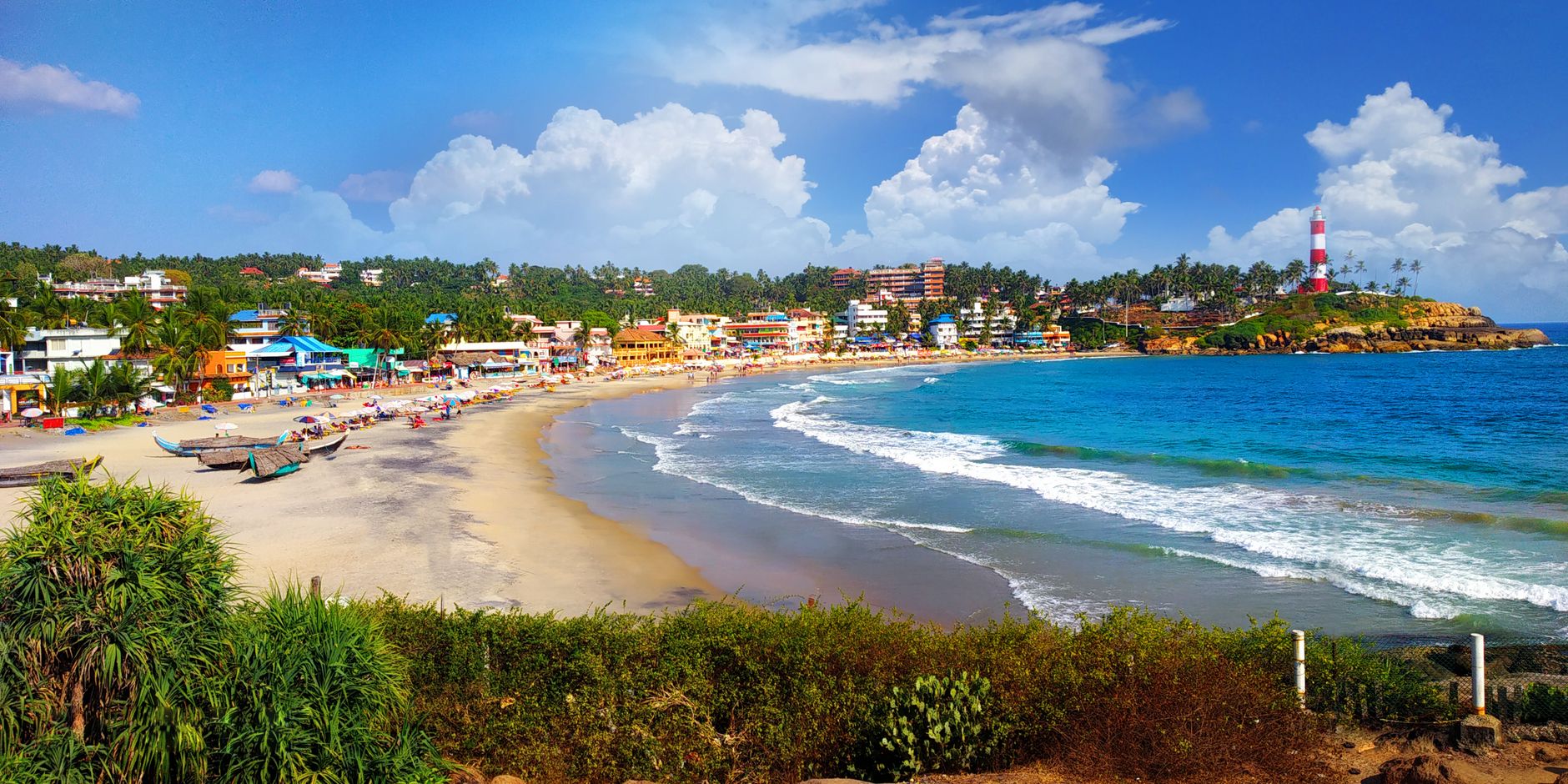
Kovalam is Kerala's original beach town, a string of coves and red laterite cliffs about half an hour from Thiruvananthapuram, where lighthouse views, Ayurvedic massage parlours and seafood shacks have been drawing travellers since the 1970s hippie trail days. It suits people who want an easy, walkable beach base with genuine wellness options rather than a party scene — think slow mornings, oil massages, fresh grilled fish and sunset walks along the promenade. It works well both as a standalone short break and as the coastal bookend to a longer Kerala trip that includes the backwaters around Alleppey or the hill stations of Munnar. Families, couples and solo travellers doing Ayurveda retreats are the main crowd; if you want loud nightlife or big water sports infrastructure, Kovalam isn't really built for that, and that's part of its appeal.
Getting There
Trivandrum International Airport (Thiruvananthapuram) is the nearest airport, roughly 15-20 km from Kovalam, and is well connected with direct flights from Delhi, Mumbai, Bengaluru, Chennai and other metros, plus international routes to the Gulf. A prepaid taxi or app-cab from the airport to Kovalam takes about 30-40 minutes depending on traffic. By rail, Thiruvananthapuram Central (also called Trivandrum Central) is the main railhead, connected to Mumbai, Chennai, Bengaluru, Delhi and most of Kerala's coastal towns; from there Kovalam is a 20-30 minute taxi or auto-rickshaw ride. Kerala's excellent bus network also runs frequent buses from Trivandrum's main bus stand to Kovalam, cheap but slower and busier.
The Beaches: Lighthouse, Hawah & Samudra
Kovalam is really three connected beaches. Lighthouse Beach, marked by the red-and-white Vizhinjam lighthouse you can climb for a small fee, is the liveliest stretch with the highest concentration of restaurants, shacks and budget-to-mid-range guesthouses right on the sand. Hawah Beach (once known as Eve's Beach) sits just north, quieter but still walkable to Lighthouse. Samudra Beach, further north past a rocky headland, is where the fishing community still works and feels more local and less touristy — a good spot for an early morning walk to watch boats come in. Swimming is generally safest in the roped-off, lifeguard-monitored sections near Lighthouse Beach; currents elsewhere can be strong, especially in the monsoon months, so pay attention to flags and warning signs and avoid swimming after dark or when the sea looks rough.
Ayurveda & Wellness
Kovalam is one of Kerala's established Ayurveda hubs, with everything from serious clinical treatment centres offering multi-week panchakarma programmes to quick one-hour tourist massages. For a genuine therapeutic experience, look for centres registered with Kerala Tourism or recommended by your hotel rather than the walk-in touts near the beach promenade, and be upfront about any health conditions before a treatment. A basic 45-60 minute massage typically costs somewhere in the ₹1,000-2,500 range depending on the oils used and the centre's standing, while structured multi-day or multi-week Ayurveda packages with accommodation run considerably higher — it's worth asking for a written treatment plan and confirming the therapist's qualifications before committing to anything long.
Food & Where to Eat
The shacks and restaurants strung along Lighthouse Beach specialise in fresh seafood — pick your fish or prawns from the day's catch displayed on ice and have it grilled, tandoori-style or in a Kerala-style curry with coconut and curry leaves. Prices are generally by weight, so it's sensible to confirm the rate before ordering. Beyond seafood, look for Kerala staples like appam with stew, puttu with kadala curry, and fresh coconut water sold by vendors along the promenade. A simple seafood meal at a beach shack might run ₹400-800 per person, while the same meal at one of the resort restaurants can cost noticeably more. For a cheaper, more local meal, head slightly inland toward Kovalam Junction where small Kerala eateries serve thalis and breakfast items at a fraction of beachfront prices.
Where to Stay & Budget
Budget guesthouses and homestays set back a little from the beach can be found from roughly ₹800-1,800 a night, while sea-facing rooms directly on Lighthouse or Hawah beach push into the ₹2,500-5,000 range. At the top end, Kovalam has a few well-known heritage and resort properties, including cliffside options with sea views, where rates can run ₹8,000 and well above depending on season. As a rough daily budget guide: backpackers can manage on ₹1,500-2,500 a day covering a basic room, local food and auto fares; a comfortable mid-range trip with a decent guesthouse, seafood dinners and the odd Ayurveda massage lands around ₹3,500-6,000 a day; and a full resort-and-wellness experience can easily exceed ₹10,000 a day. Prices rise noticeably in peak season (December-January) and around Christmas/New Year, so book ahead if travelling then.
Getting Around
Kovalam itself is compact and largely walkable between the three beaches, connected by a coastal path and small lanes, though the terrain has some steps and slopes near the lighthouse headland. For trips into Trivandrum city, the airport, or nearby attractions like Vizhinjam or Poovar backwaters, auto-rickshaws are the easiest option — agree on a fare beforehand or ask your hotel for the going rate, since meters aren't always used. App-based cabs are increasingly available for airport or longer city runs and tend to be more predictable on price.
Practical Tips & Nearby Trips
Kovalam is generally safe and tourist-friendly, but the usual beach-town caution applies: watch your belongings on the sand, use registered Ayurveda centres, and negotiate autorickshaw/taxi fares upfront. Sun protection matters year-round given the direct tropical exposure, and modest swimwear or covering up when walking through the village lanes is appreciated given it's also a working fishing community. Worthwhile day trips include Vizhinjam, a small fishing harbour with an old mosque and rock-cut cave temple nearby, and the backwater canals around Poovar, about an hour south, where you can take a short houseboat or canoe ride through mangroves to where the river meets the sea. Padmanabhapuram Palace, a well-preserved wooden royal palace across the border in Tamil Nadu, is also feasible as a half-day trip from Kovalam.
Best time to visit
The most comfortable window is roughly November to February, when humidity drops and the sea is generally calm — this is also peak season, so beachfront rooms fill up and rates rise, especially around Christmas and New Year. March to May turns hot and humid and is best avoided for long beach days. The monsoon, roughly June to September, brings heavy rain and rough seas that make swimming unsafe, though it's also when many Ayurveda centres consider treatments most effective and prices/crowds are at their lowest — a good trade-off for wellness-focused travellers who don't mind grey skies. October is a reasonable shoulder month with thinning rains and fewer crowds.
Timings & entry fees
| Place | Open | Entry |
|---|---|---|
| Vizhinjam LighthouseSmall extra charge if carrying a camera; closes briefly around 1-2 PM in some seasons, best to check locally | 10:00 AM - 5:00 PM, Closed Mondays | ₹20 |
| Lighthouse BeachSwimming safest only in the lifeguard-monitored, roped-off section during daylight | Open 24 hours | Free |
| Hawah BeachNo lifeguard cover, so avoid swimming here | Open 24 hours | Free |
| Samudra BeachWorking fishing beach, dress modestly and be mindful of boats and nets | Best visited early morning (around 6:00 AM - 9:00 AM) or evening | Free |
| Vizhinjam Rock-cut Cave TempleSmall ASI-protected site, no formal ticket counter | 8:00 AM - 6:00 PM | Free |
Timings and fees change — confirm before you travel, especially on festival days and public holidays.
Distances & travel times
- Trivandrum International Airport Kovalamabout 16 km· about 30-40 min
- Thiruvananthapuram Central Railway Station Kovalamabout 15 km· about 20-30 min
- Lighthouse Beach Hawah Beachabout 1 km· about 10-15 min walk
- Hawah Beach Samudra Beachabout 1.5 km· about 15-20 min walk
- Kovalam Vizhinjamabout 3 km· about 10 min
- Kovalam Poovar Backwatersabout 20 km· about 45 min - 1 hour
- Kovalam Padmanabhapuram Palaceabout 45 km· about 1.5 hours
Frequently asked
- Is Kovalam worth visiting?
- Yes, if you want an easy, walkable beach base with genuine Ayurveda options, fresh seafood and sunset lighthouse views rather than a party scene — it's one of Kerala's most relaxed coastal towns and works well solo, as a couple or with family. Skip it if you want loud nightlife, big water sports infrastructure or untouched, undeveloped beaches; Kovalam has been on the tourist trail since the 1970s and feels it, in a good and a slightly commercial way. It's also better as a 2-3 day add-on to a wider Kerala trip (backwaters, hill stations) than as a week-long solo destination unless you're doing a proper Ayurveda programme.
- Is Kovalam safe?
- Generally yes — it's one of Kerala's more tourist-experienced beach towns, with the usual precautions covering most risks: watch belongings on the sand, use registered taxis or autos with fares agreed upfront, and stick to registered Ayurveda centres rather than beachfront touts. Swimming is only reliably safe in the lifeguard-monitored, flagged section of Lighthouse Beach; Hawah and Samudra have unpredictable currents, and nobody should swim after dark or during the monsoon when seas are rough. Solo travellers and women generally do fine here, but dressing modestly away from the immediate beach strip is worth it since Kovalam is also a working fishing village, not just a resort.
- What is the worst time to visit Kovalam?
- June to September, the monsoon, is the worst stretch for a standard beach holiday — heavy rain and rough seas make swimming unsafe, and the main appeal of Kovalam (beaches, promenade walks) is largely off the table. March to May isn't much better for beach lounging either, as heat and humidity climb sharply. The one exception is wellness-focused travellers, since many Ayurveda centres consider monsoon the most effective season for treatments, and both prices and crowds drop to their lowest then.
- When is Kovalam least crowded?
- The monsoon months (June-September) are quietest by far, with the lowest prices and thinnest crowds, though the trade-off is rain and seas too rough for swimming. October is the better compromise — rains are thinning out, crowds are still light, and the weather is workable for beach days. Avoid December-January if you want space to yourself, since that's peak season with the highest rates and fullest guesthouses.
- How many days should I spend in Kovalam?
- Two to three days covers the beaches, a sunset lighthouse climb, a seafood dinner or two and a day trip to Poovar or Vizhinjam, which is enough for most travellers using it as a coastal bookend to a longer Kerala itinerary. If you're coming specifically for a structured Ayurveda or panchakarma programme, plan on a week or more, since the multi-week packages are where the real therapeutic benefit (and the bigger spend) kicks in.
- Is a long Ayurveda package in Kovalam worth the money?
- If you choose a centre registered with Kerala Tourism, confirm the therapist's qualifications and get a written treatment plan, a multi-day or multi-week package can be genuinely worthwhile and is a large part of why serious wellness travellers come to Kovalam specifically. It's not worth it if you just want a holiday massage — a single 45-60 minute session at a reputable walk-in centre, running roughly ₹1,000-2,500, gets you most of the relaxation benefit without the commitment or cost of a full programme.