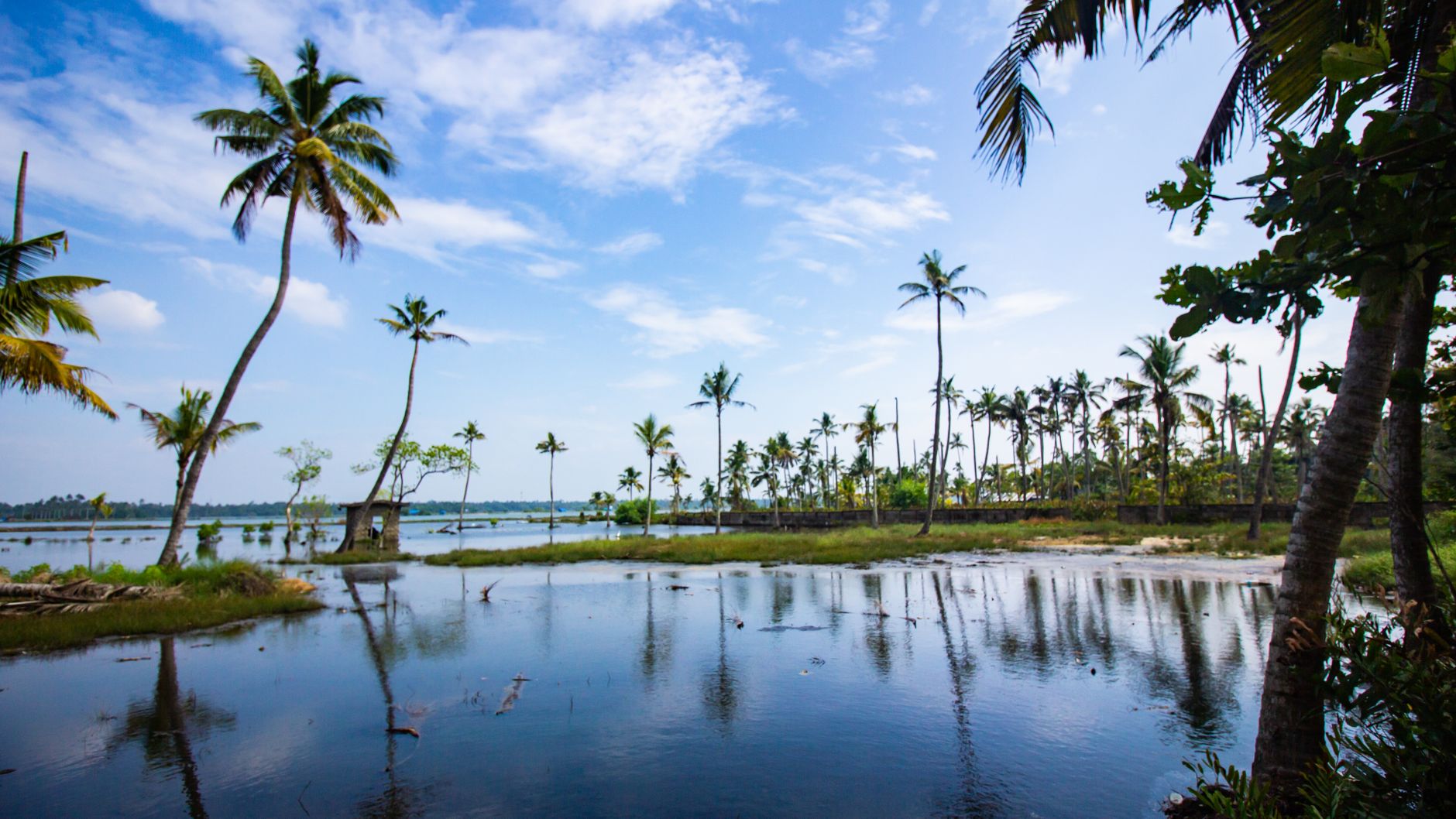
Marari Beach, in the fishing village of Mararikulam near Alappuzha, is what Kovalam and Varkala were before they got crowded: a long, quiet stretch of grey-gold sand backed by coconut palms, with fishermen hauling in nets by hand rather than tour buses hauling in selfie sticks. There's no beach road lined with shacks, no nightlife, and barely any shopping — the whole point of Marari is doing very little, well.
Getting There
The nearest airport is Cochin International Airport (COK), about 65 km away — figure on 1.5 to 2 hours by taxi depending on traffic through Cherthala. The nearest railhead is Alappuzha (Alleppey) railway station, roughly 14 km south, with regular trains from Kochi, Kollam and Thiruvananthapuram; a prepaid auto or taxi from the station takes about 30 minutes. There's no direct long-distance bus stop right at the beach, so most visitors arrive by pre-booked cab or as part of a resort transfer, especially at night when the village lanes are unlit and easy to miss.
The Beach and the Fishing Village
Marari's beach itself is long, sandy and largely empty even in season — this is its main draw. Early mornings are the best time to walk it: you'll see catamarans and country boats coming in, and fishermen sorting the catch on the sand, a scene that's changed little in decades. There are no beach shacks or vendors crowding the shoreline, which is either the appeal or the disappointment depending on what you're after. Sunsets are genuinely good, with the sky reflecting off wet sand at low tide.
Ayurveda and Wellness Resorts
Marari has quietly become one of Kerala's better addresses for serious Ayurveda, anchored by long-established properties like Marari Beach Resort (CGH Earth) and a handful of smaller Ayurvedic retreats along the coast. These aren't spa-menu massages tacked onto a beach holiday — many offer structured multi-day or multi-week treatment programmes with resident doctors, which is worth knowing if you're booking for genuine therapy rather than a one-off rubdown. Monsoon (June to September) is actually the classical season for Ayurvedic treatment in Kerala, so if wellness is your main reason to come, don't rule out visiting in the rains despite the weather being otherwise unfavourable.
Backwater Day Trips
Marari sits close enough to Alappuzha and Kumarakom to use as a base for backwater excursions without staying in a houseboat overnight. A half-day canoe or shikara trip through the narrower village canals near Alappuzha shows a quieter, more local side of the backwaters than the wide main channels the big houseboats cruise. If you do want an overnight houseboat, it's easy enough to arrange a pickup from Alappuzha's boat jetty, about 25-30 minutes from Marari.
Food
Eating out beyond the resorts is limited — this is a village, not a restaurant strip. Most visitors eat at their resort or homestay, where Kerala seafood (karimeen, prawns, crab in coconut-based curries) is usually done well and freshly sourced from the local catch. A few small local eateries near the main junction serve simple Kerala meals (rice, fish curry, thoran) at a fraction of resort prices if you want to eat like a local rather than a guest. Toddy shops in the surrounding villages are worth seeking out for an authentic, cheap lunch of fried fish and toddy, though ask locally for a clean, reliable one.
Budget
Marari runs at two very different price points. Budget homestays and guesthouses cost roughly ₹1,500-3,000 a night and put you closer to actual village life. The well-known Ayurveda and beach resorts are considerably pricier, often ₹8,000-20,000+ a night including meals and can push higher with treatment packages. Food outside resorts is cheap (₹100-250 for a full local meal), but there's little to spend money on beyond eating, treatments and the occasional canoe trip, so budgeting here is mostly about picking your accommodation tier.
Getting Around
Marari itself is small enough to walk or cycle — many resorts lend or rent bicycles, which are the nicest way to explore the palm-lined lanes and paddy fields inland. For trips to Alappuzha, Cherthala or Arthunkal, autos and pre-booked taxis are the norm; there's no real app-cab coverage here, so arrange transport through your resort or homestay in advance, particularly for late arrivals or departures.
Practical Tips
Marari is not a swimming beach in the way Goa's calmer bays are — currents and undertow can be strong, especially outside the monsoon-recovery months, so swim cautiously and follow any local advice about safe stretches. Mosquitoes are a real presence in the evenings given the paddy fields and canals nearby, so pack repellent. There are very few ATMs or shops in the village itself, so carry enough cash and stock up on essentials before arriving, especially if you're staying in a smaller homestay rather than a full-service resort.
Best time to visit
November to February is the best window: cool, dry, and pleasant for the beach and outdoor time. October and March are decent shoulder months with fewer visitors and lower prices. April-May is hot and muggy with little relief, and June-September brings the monsoon with rough seas and heavy rain — skip this period unless you're specifically visiting for a classical Ayurveda treatment course, for which monsoon is traditionally considered ideal.
Timings & entry fees
| Place | Open | Entry |
|---|---|---|
| Marari BeachNo lifeguards; currents can be strong, swim with caution | Sunrise to sunset | Free |
| Arthunkal St. Andrew's Basilica (nearby pilgrimage church)About 5 km from Marari; busiest during its January feast | 6:00 AM - 8:00 PM | Free |
| Alappuzha Boat Jetty (for backwater/houseboat trips)Book houseboats in advance, especially in peak season | 8:00 AM - 5:00 PM | Free to visit; houseboat cost varies |
Timings and fees change — confirm before you travel, especially on festival days and public holidays.
Distances & travel times
- Cochin International Airport (COK) Marariabout 65 km· about 1.5-2 hours
- Alappuzha Railway Station Marariabout 14 km· about 30 min
- Marari Alappuzha Townabout 12 km· about 25 min
- Marari Kumarakomabout 40 km· about 1.5 hours
- Marari Kochi Cityabout 70 km· about 2 hours
- Marari Arthunkal Churchabout 5 km· about 15 min
Frequently asked
- Is Marari worth visiting?
- Yes, if you want a genuinely quiet Kerala beach with minimal commercial clutter, good seafood and serious Ayurveda options — it rewards slow travellers who don't need nightlife or beach shacks. It's not worth it if you're after lively beach culture, water sports, shopping or a packed activity list; for that, Varkala or Goa suit better. Think of Marari as a place to decompress for a few days, not a full standalone holiday destination.
- Is Marari safe?
- Yes, it's a low-crime, low-hassle fishing village and generally comfortable for solo travellers and women, day or evening. The main safety concern is the sea itself — currents can be strong and there are no lifeguards, so treat it as a look-don't-swim-carelessly beach rather than a safe swimming spot. At night the village lanes are poorly lit, so arrange transport in advance rather than walking unfamiliar routes alone.
- What is the worst time to visit Marari?
- April and May are hot, humid and largely dead in terms of atmosphere, with little sea breeze relief. June to September brings the southwest monsoon with heavy rain and rougher seas, making beach time impractical — though this is oddly the best window if your main goal is a classical Ayurveda treatment course rather than sunbathing.
- When is Marari least crowded?
- Marari is never genuinely crowded — that's its whole appeal — but it's at its emptiest during the shoulder months of October and March, just outside peak season, when prices also dip. Even in the December-January peak, it stays far quieter than Kovalam or Varkala.
- How many days should I spend in Marari?
- Two to three days is enough to enjoy the beach, take a backwater excursion and settle into the slow pace, unless you're doing a longer Ayurveda treatment programme, which can run one to three weeks. Beyond that without a specific wellness goal, most travellers find the limited activity range starts to feel repetitive.
- How does Marari compare to Kovalam or Varkala?
- Marari is quieter and more authentic-feeling than either, with almost no beach-shack tourist infrastructure — the trade-off is fewer restaurants, shops and things to actually do. Varkala has dramatic cliffside views and a lively café strip; Kovalam has more established tourist infrastructure and nightlife. Choose Marari for rest and Ayurveda, Varkala for scenery and cafés, Kovalam for convenience and variety.
- Is the Ayurveda treatment at Marari resorts worth the money?
- For a genuine multi-day or multi-week programme at an established resort with a resident doctor, yes — Kerala's Ayurveda tradition is strongest exactly in places like this, and the results from a proper course are real. A single one-off spa massage booked casually is fine as a relaxing treat but shouldn't be expected to deliver the therapeutic benefits Ayurveda is known for.